The 1979 controversy over Milligan’s unsupervised furloughs
The Minds of Billy MilliganThe 1979 controversy over Milligan’s unsupervised furloughs began when public attention shifted from Billy Milligan’s treatment to the possibility that he could leave the Athens Mental Health Center without supervision. A newspaper campaign framed those leaves as a danger to the public; community concern and political pressure followed. The resulting restrictions damaged Milligan’s trust in the treatment process, unsettled the hospital’s therapeutic arrangements, and helped drive a wider debate over Ohio’s rules for people found not guilty by reason of insanity.
Treatment and the opening to public scrutiny
After Milligan’s trial, Dr. David Caul presented his stay at Athens as the beginning of a different life: Milligan was no longer to be treated as a criminal, but was expected to work toward getting well and bringing himself together. That therapeutic outlook included privileges that would later become the focus of the controversy. By March 1979, Milligan was permitted to leave hospital grounds and take weekend visits with relatives. The arrangement made a practical and symbolic distinction between treatment in an open setting and confinement under constant observation.
The contrast with Milligan’s earlier admission was substantial. At Harding Hospital he had been placed in Wakefield Cottage, a locked unit for difficult patients needing constant observation, with special-care rooms watched through peepholes. Athens represented a less restrictive environment and a chance to make progress outside that form of close supervision. The later press coverage would largely recast this change in terms of public risk, rather than as part of a treatment plan.
Headlines, alarm, and political pressure
On March 30, while Milligan was back on the ward, a fellow patient handed him the afternoon paper. The front page announced that a doctor said a rapist was being allowed to roam from the center. The report described Milligan as able to leave the hospital grounds and visit relatives on weekends, and quoted Athens police chief Ted Jones describing community concern. It also quoted Judge Jay Flowers, who had found Milligan not guilty, as opposing his freedom to roam at will. The story ended by recalling the terror associated with the late-1977 attacks near Ohio State University.
The Columbus Dispatch followed with almost daily articles criticizing the arrangement. An April 5 editorial called for legislation to protect society. Alarm spread beyond the paper: readers in Columbus and parents of students at Ohio University called university president Charles Ping, who sought clarification from the hospital. The controversy thus grew through a chain of amplification, from a report about specific leave privileges to broader public and political demands about the safety of the community.
Two legislators, Claire “Buzz” Ball, Jr., of Athens and Mike Stinziano of Columbus, criticized the hospital and Dr. Caul and pressed for hearings and changes to the laws governing not-guilty-by-reason-of-insanity cases. Meanwhile, staff members hostile to Milligan’s ability to earn money from his paintings leaked reports about his finances to several newspapers. When he used money from the sale of The Grace of Cathleen to buy a compact Mazda to transport his paintings, that purchase also became headline material. The focus had widened from the conditions of his leaves to his spending and the hospital’s broader handling of him.
Restrictions and the cost to treatment
Under mounting attacks, Dr. Caul and Superintendent Sue Foster asked Milligan to give up his furloughs and his permission to leave the grounds unattended until the uproar subsided. Milligan had followed hospital rules, kept his word, and broken no laws since his illness had been diagnosed and treated. The withdrawal of privileges nevertheless made him feel that compliance had not protected him from punishment. The Teacher, who had been occupying the spot, gave up control and left it; the political dispute had registered inside the system of personalities as a personal defeat.
The pressure did not end with the March coverage. On April 7, the Dispatch declared that Milligan was in a security ward after a supposedly faked drug overdose. Its attacks now reached the Athens Mental Health Center and Dr. Caul as well as Milligan. Caul received abusive calls and death threats, and began checking around his car before getting in; he kept a loaded revolver beside his bed. When Ball and Stinziano sought an outside evaluation of the treatment, Dr. Cornelia Wilbur reviewed the program and praised Caul’s approach. She explained that setbacks could occur in cases of multiple personalities, and her recommendation supported keeping Milligan in Athens.
The hospital’s internal response also tightened control. Staff on the Admissions and Intensive Treatment ward, distressed by publicity and Milligan’s reaction to it, demanded changes to his plan and threatened to strike. They sought day-to-day authority for the staff team and a narrower role for Caul. A written contract restricted Milligan’s access to objects, visitors, telephone calls, money, and painting supplies; even painting was to take place only under supervision. Privileges would return in stages only after two weeks of compliance. These conditions made the consequences concrete: a dispute over unsupervised leave reshaped ordinary contact, creative work, and treatment authority inside the ward.
Institutional and legal aftermath
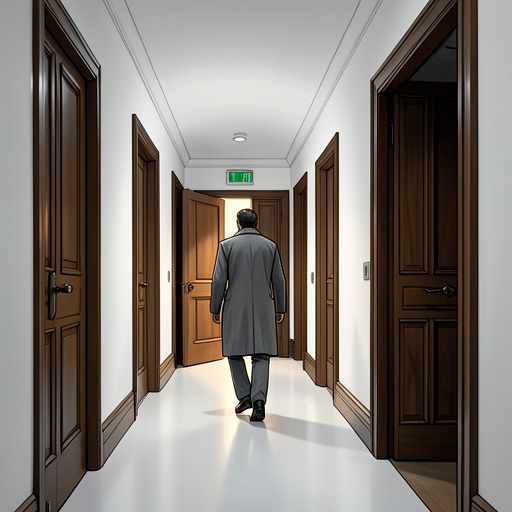
The controversy formed part of the pressure surrounding Milligan’s eventual removal from Athens. After a hearing, he was handcuffed and belt-shackled and taken 180 miles to Lima State Hospital for the Criminally Insane on October 4, 1979, with no time to say goodbye except to Dr. Caul. The transfer marked a sharp reversal from the promise of an open treatment setting. It also left Milligan hoping that he could return to Athens and resume treatment with Caul.
The dispute had consequences beyond Milligan’s placement. During 1979, Ohio legislators considered changes to the laws governing people found not guilty by reason of insanity. The resulting Senate Bill 297 gave county prosecutors the right to demand a hearing before a patient could be transferred to a less restrictive setting, lengthened the review interval from 90 to 180 days, and opened reviews to the public, press, and television. It became known to some as the Columbus Dispatch law or the Milligan law. Judge Flowers later said the law had been passed because of Billy. The controversy therefore became more than a fight over one patient’s furloughs: it helped transform public fear, institutional conflict, and press scrutiny into a lasting change in the rules governing treatment and release.